
What is Documentary Wedding Photography?
What is documentary wedding photography, how does it work, and why should you choose it for your wedding?
What is Documentary Wedding Photography?
Documentary wedding photography is a visual storytelling technique that records a wedding day purely through candid, unscripted moments. Rather than pausing scenes or creating artificial poses, the photographer anticipates and creatively captures real interactions and events naturally as they unfold. In doing so the photographer captures the genuine joy, energy and reality of the day without ever taking the couple, or their guests, out of the moment.
But whilst those are the broad brushstrokes of the genre, like any art form there is plenty of nuance, invention, and individual creative identity within it.
For us, perhaps the more accurate description would be:
“The art of finding and photographing magic where nobody else ever thought to look”.
Because we believe that the real story of your wedding is infinitely more interesting, humorous and beautiful than any version a photographer could artificially create.
Love the philosophy? Hire the photographers.
This guide defines the craft, but seeing it in action is better. We are York Place Studios, award-winning Documentary Wedding Photographers available across the UK and worldwide.
The Documentary Advantage
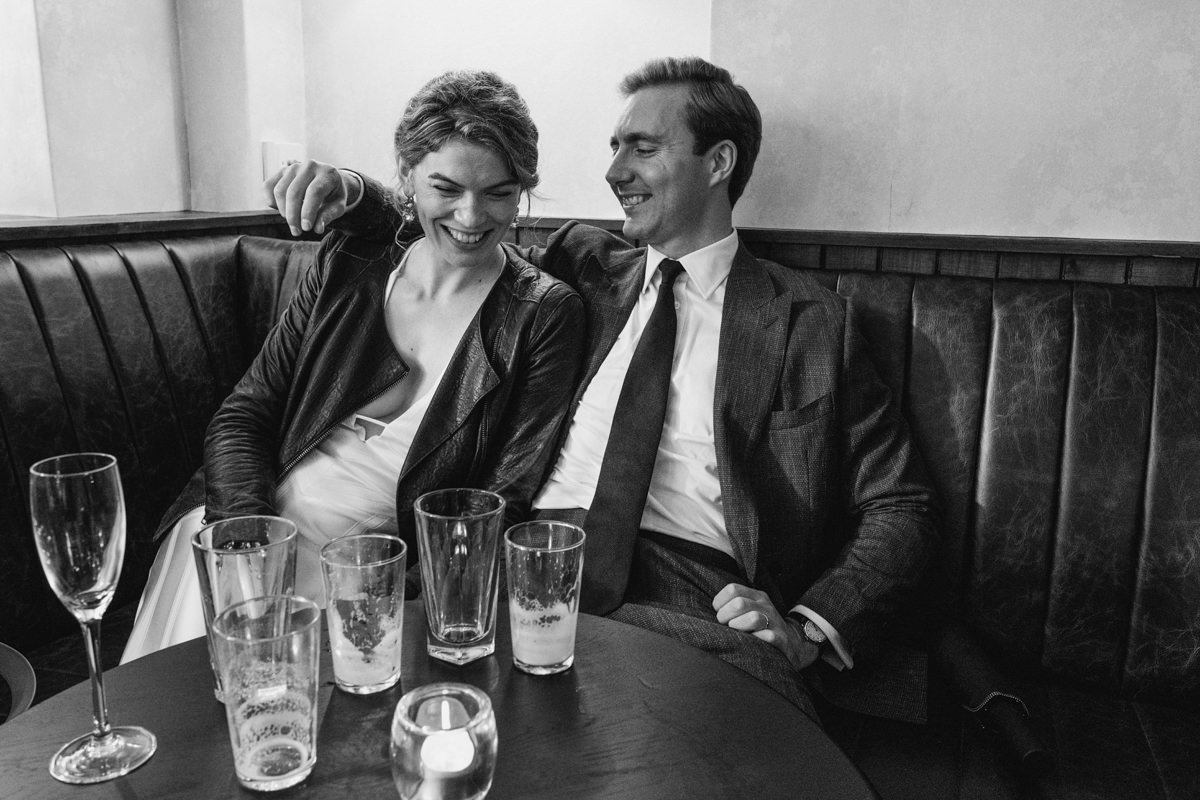
Total Presence. Zero Performance

Atmosphere Over Artifice.

Memories With Emotional Longevity
Explore the craft
- What you need to know:
- The Naming Confusion — Defining Documentary vs. Reportage vs. Photojournalism.
- The Street Photography Instinct — Finding art in the unposed through geometry and timing.
- The Process and the Adaptive Presence — The art of the non-interventionalist and hiding in plain sight
- The Narrative Depth — Capturing the subplots and hidden stories of your guests.
- The Legacy of Truth — Why honest, unscripted memories carry the most emotional weight.
- Expert Insights — Navigating the practicalities: Group shots, portraits, and travel.If I’m new to this artform how do I tell a good image from a bad one?

About the authors
Global Educators: Authors and international speakers who have taught our signature documentary approach to photographers in over 34 countries
The Naming Confusion
A Brief Breakdown of the Buzzwords:


Definition vs reality


This photograph is, after all, clearly unposed and provides a factual record of events - the wedding reception taking place in front of the venue, with all the guests sipping wine and chatting happily. But, whilst it shows us what happened, it doesn't tell us anything about the people depicted. It doesn't reveal their personality or tell us anything about how the moment felt
The Street Photography Instinct
1. The Art of Anticipation
True street-style documentary isn’t reactive; it’s predictive. We identify the light, the background, and the potential for a story long before the peak of the action occurs. By “building the frame” in our minds first, we are ready and waiting when the emotion, the gesture, or the “decisive moment” finally enters the scene and completes the composition. This allows us to capture the chaos of a wedding with a sense of deliberate, artistic intent
2. Fleeting Geometry
Street photography teaches you to see the world in shapes, shadows, and layers. We look for the “geometry” of the room – using doorways, reflections, or the way people are positioned to create depth. This “Fleeting Geometry” ensures that our images don’t just record who was there, but create a visual narrative that draws the viewer deep into the atmosphere of the memory.
3. Immersive Perspective
While many documentary photographers use long “telephoto” lenses to stay far away (the paparazzi approach), our street photography background draws us into the thick of it. We use wider lenses that require us to be physically close to the action. This creates an immersive perspective, making the viewer feel like a guest at the wedding, not just an observer looking through a window.


Building a Documentary Photograph


We work to the principal that "there's always a better shot", so even if we capture a photograph that looks good, we continue to work the scene until the possibilities are exhausted. Here we are able to frame multiple guests in the scene, each with interesting light, clearly defined space and individual body language.
The Process & The Adaptive Presence
1. Reading the Room
We don’t just arrive and start shooting; we arrive and listen. Every wedding has a different energy. Sometimes it’s a quiet morning where the couple is nervous, and we need to provide a calm, gentle conversation to put them at ease. Other times, the party is already in full swing, and we can immediately disappear into the background. Our process is about being exactly who you and your guests need us to be in that moment to ensure the “Observer Effect” fades and everyone feels free to be themselves.
2. Hiding in Plain Sight
We don’t try to be ninjas or hide in the shadows. In fact, trying to be “invisible” often makes a photographer more noticeable. Instead, we believe in hiding in plain sight. We are there, in the room, accessible and human. The goal isn’t for people to never see us; it’s for them to see past us. By being a relaxed, natural presence in the room, the camera eventually becomes “part of the furniture.” When guests stop seeing the lens, they start being themselves.
3. Moving Our Feet, Not Your Memories
In many styles of photography, the artist acts as a director, saying: “Could you just move into that light?” or “Can you do that again?” We believe that your memories are sacred and should never be staged. If the light is “bad,” we change our angle; if the composition isn’t right, we move our position. We move our own feet to find the art; we never move yours to create it.
4. The Immersive Observer
There is a difference between being “unobtrusive” and being “detached.” We aren’t hiding in the corner with a telephoto lens like paparazzi; we are right there in the thick of the action. This allows us to capture the vibration and intimacy of the day from the inside out, rather than looking in from the outside.
Our adaptive presence changes as the day evolves. For a detailed look at how we document every stage of the journey—from the quiet of the morning to the energy of the dance floor—see our Approach to the Wedding Day→


The Narrative Depth
The Ensemble Cast
Your wedding is a unique gathering of every “tribe” in your life – friends from childhood, colleagues, and generations of family. A true documentary narrative treats your guests as more than just a background; they are essential characters. Whether it’s the quiet pride on a grandfather’s face or the chaotic joy of children playing under the reception tables, these moments are the threads that weave the full story of your day together.
The "Unseen" Wedding
As the couple, you are often at the centre of a beautiful whirlwind. It is impossible for you to see everything. Our goal is to photograph what you saw, but also what you missed. By looking away from the main action at the “right” time, we capture the hidden beats of the day – the shared jokes, the unexpected tears, and the quiet interactions that happen in the corners of the room.
A Multi-Layered Narrative
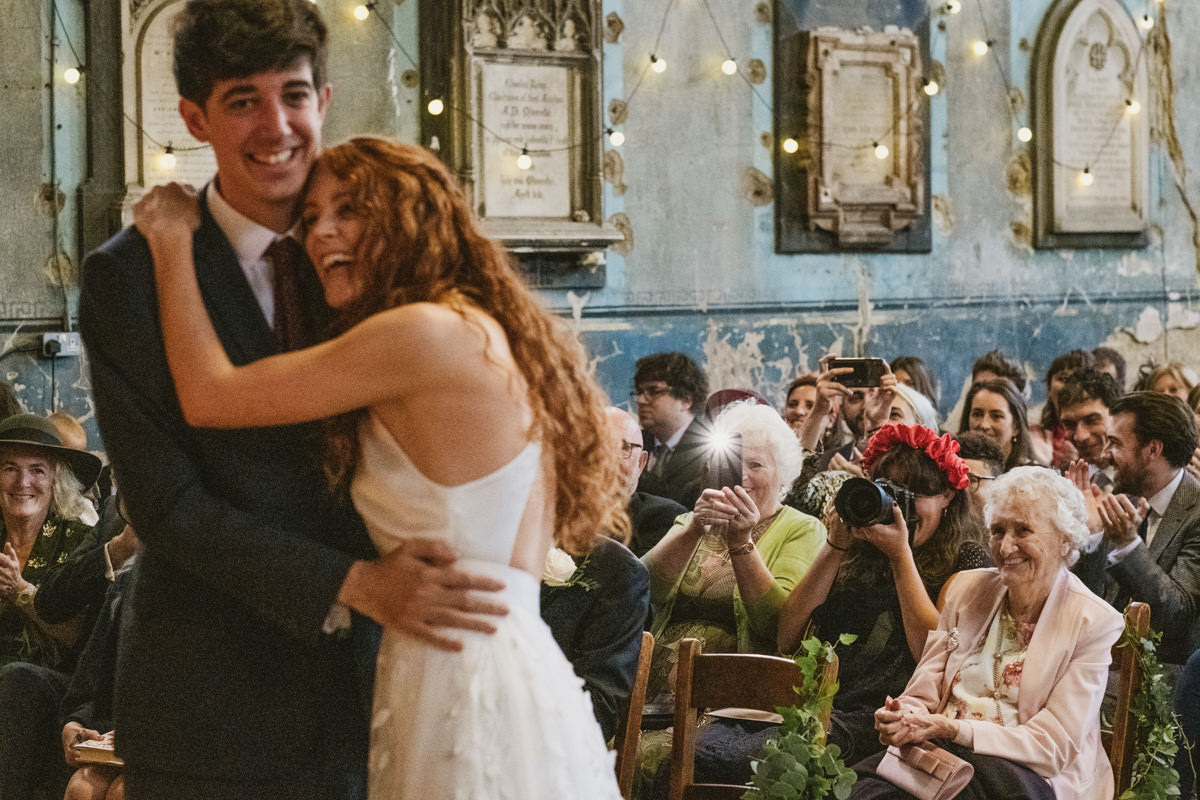
Using the principles of street photography, we look for frames that contain multiple stories. A single photograph might show you laughing in the foreground while, in the same frame, your best friends are sharing a toast behind you. This edge-to-edge “layering” provides a 360-degree view of the atmosphere, ensuring your gallery isn’t just a highlight reel, but a deep, immersive record of the entire experience.
We look for the subplots that define the atmosphere. You can explore these layers in action across our featured wedding stories →


Separate but Connected

01. FOREGROUND TO BACKGROUND
02. "DECISIVE MOMENT MAGIC"
03. SHAPE AND STORIES
The Legacy of Truth
Truth Over Trends
A photograph of a genuine, unscripted moment never goes out of style. A real laugh, a tear caught in mid-air, or a look of pure relief after the ceremony doesn’t rely on a specific editing “vibe” to be powerful. By prioritizing the truth of the moment over the trends of the industry, we provide you with a gallery that will look as honest and impactful in fifty years as it does on the day you first receive it.
The Window to the Past
As the years pass, the most valuable photographs won’t be the ones of the shoes, the flowers, or the cake. They will be the photos of the people you love being themselves. Our goal is to create a record that acts as a direct line back to your wedding day – not just showing you what happened, but allowing you to feel the vibration and energy of that moment in time. These are the images that grow in value every year because they capture a version of your history that was never performed for a camera.
The Ultimate Heirloom
Ultimately, documentary wedding photography is about the unmade frame. It is the belief that your life, exactly as it is, is beautiful enough to be recorded without a script or a director. It is the art of observation, and the result is the most honest legacy you can leave for yourselves and the generations that follow.


"Is This Something?" - The Philosophy in Print
We didn’t just adopt this style; we deconstructed it. As authors of the acclaimed book Is This Something?, we have spent years codifying the street-photography principles that define modern documentary wedding photography. What you see on this page is the foundation of a craft we now teach to professional photographers in over 34 countries.

Expert Insights: Navigating the Logistics
01. Do you still take formal group photographs?
The Documentary Approach to GroupsThe choice is entirely yours. There is absolutely no compulsion to include formal group shots, and many of our couples choose to skip them entirely to stay completely immersed in the energy of the celebration. We are entirely in our element with a day that is 100% unscripted.
However, we also recognise that these can be valuable historical records. When you choose to include them, our two-photographer approach provides a unique advantage: while one of us coordinates the group, the other remains entirely focused on the “unseen” moments happening around it. Furthermore, we find that the act of bringing people together often “shuffles the pack”—creating new interactions and spontaneous moments that we are ready to capture in-between the constructed frames. If you do want groups, we keep the process relaxed and fast—usually no more than 15–20 minutes—so you can get back to your guests.
02. Will we have any couple photos if you don't do posing?
Finding the "Found" PortraitWe believe the most honest portraits are the ones you didn’t know were happening. We look for the “Found Portrait” – those moments when the two of you are naturally together, lost in the energy of the day, and unaware of the camera.
By staying observant rather than interfering, we capture your connection with the artistry and precision of a portrait, but without the staged artifice. If you do choose to have a short breather for more coordinated shots, we keep them fast and unposed, prioritising the reality of your connection over a script.
For a deeper look at how we achieve this, you can read our full article on documentary wedding portraits.
03. Why do you nearly always work as a team of two?
The Power of the PartnershipWhile we are both more than capable of documenting a wedding individually, we choose to work as a duo for three vital reasons. First, it allows for a vastly superior narrative; we can cover every angle without interruption, documenting the parallel stories of your day simultaneously. Second, we work together because we simply enjoy the process of creating art more as a partnership than we do apart.
Finally, this partnership provides you with built-in redundancy. Because we are both primary, world-class photographers with no “main” or “second shooter” hierarchy, you have an “instant backup” already on-site. In the unlikely event that one of us were unable to attend, you still have a lead photographer who literally wrote the book on the craft capturing your day. This ensures your memories are protected by a world-class eye, no matter what.
04. How do your photography and filmmaking teams work together without getting in each other's way?
The Photo & Film SynergyBecause our photography and filmmaking teams use the same unscripted language, we never step on each other’s toes or crowd your guests. We work as a single, intuitive unit, anticipating the same moments without needing to “direct” the scene for the benefit of the other.
05. Do you need to visit our venue in advance to scout for locations?
Venue VisitsWe don’t believe in scouting venues in advance. Because our work is entirely people-based and spontaneous, the light, the energy, and the moments will be different every single time. Our background in street photography means we are highly trained to arrive at any space—whether we’ve seen it before or not—and instinctively identify the best light and the most compelling angles at lightning speed. We find the art in the room as it lives on your specific day, rather than trying to force your wedding into a pre-planned location we saw weeks earlier.
06. Our venue is quite dark; will you be using lots of bright flash?
Preserving the AtmosphereWe prefer to work with the light as it exists. Because we don’t use intrusive flash to “stage” or overpower scenes, we preserve the authentic atmosphere and the “memory of the feeling” of the room exactly as you remember it. We use the available light to capture the true vibration and mood of your celebration.
07. What kind of cameras do you use?
Discrete and Disarming. Celebrating film heritage.To stay immersed in the moment without breaking the spell, we use the discreet, world-class Fujifilm system. As former Fujifilm Ambassadors and leading voices in the international Fujifilm community, we have spent years mastering this technology to ensure we can work at lightning speed in any lighting condition without ever being a distraction to you or your guests. Our choice of gear reflects our commitment to speed, silence, and total presence – allowing us to document your day from the inside out.
Ready for a wedding experience without the script?
Check our AvailabilityRead more articles by the York Place Team about documentary wedding photography and videography

Documentary Family Photography

Documentary Vs Reportage Vs Photojournalist Wedding Photography

Documentary Wedding Photographer

Documentary Wedding Portraits

Documentary Wedding Videographer

Street Wedding Photography

Wedding Photography & Videography – The Key Similarities & Differences
